Search evolves rapidly. It moves faster, reacts to real-time behavior, and demands more precision from every page.
Most teams still depend on manual audits, static keyword reports, and delayed metadata updates. These tasks create bottlenecks instead of driving growth.
That’s why we built KIVA an AI SEO Agent. It transforms raw keyword data into structured briefs, content, and edits. With KIVA, your team replaces outdated processes with search optimization automation that accelerates publishing and removes guesswork.
Freelancers spend hours compiling data and often react only after traffic drops. For lean teams, automating keyword research is the first unlock. Startups miss technical gaps, and agencies stall on approvals losing visibility that smarter automated workflows could preserve.
Modern SEO automation platforms change that. They monitor performance, detect issues, and suggest next steps before rankings decline.
More content always creates more gaps. Without automation, those gaps remain undetected and unresolved.
Automation doesn’t replace strategy it clears the way for it. It highlights what matters, enables faster action, and keeps your momentum intact.
What Is SEO Automation? (And What It’s Not)
Marketers often misunderstand SEO automation. It’s not about generating AI content or relying only on dashboards that track rankings. Those are tools. Automated Search Engine Optimization means building a connected system. Tools flag issues, while agents resolve or queue them for action. A system ensures workflow automation runs smoothly in the background.
Here’s a quick look at what SEO automation is not and what it looks like when done right:
| Not SEO Automation | True SEO Automation |
|---|---|
| Rank tracking dashboards | Agents detecting and fixing ranking decay |
| AI content generation | Workflow triggers based on real performance |
| Manual link audits | Auto-suggested internal links by intent cluster |
| Static SEO reports | Real-time issue detection and prioritized task queues |
| One-time audits | Continuous monitoring with contextual alerts |
With KIVA, automation starts by uncovering Hidden Gems high-value, low-competition keywords in your Google Search Console. From there, KIVA groups them by search intent, analyzes SERPs and LLMs, and produces structured briefs and content you can publish faster.
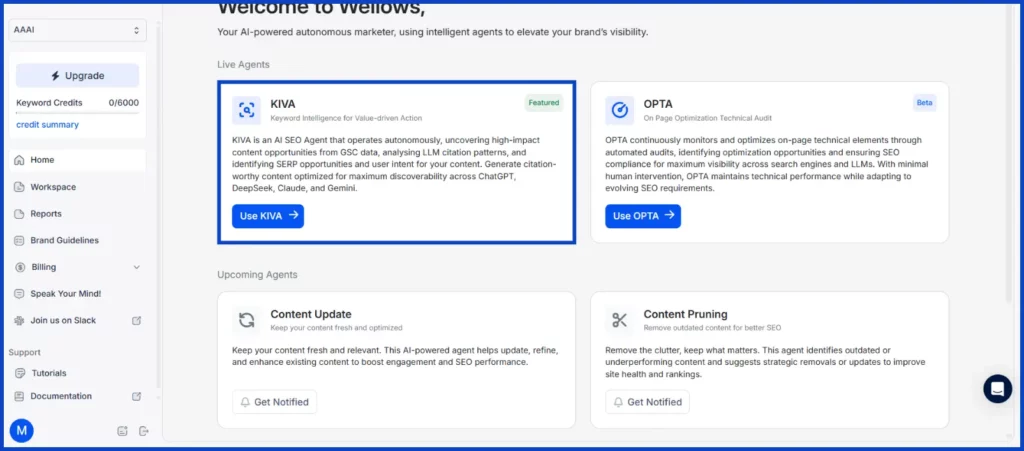
At its core, an SEO automation platform structures repeatable tasks so they operate consistently. It connects data points, identifies intent gaps, and triggers specific actions without manual input.
To make automation practical, consider the Detect, Diagnose, Deploy Loop to simplify this process, whether working solo or in larger teams.
If you want to explore where SEO workflow automation fits in the broader landscape, check out our complete SEO guide.
The Detect Diagnose Deploy (3D) Loop
| Phase | What Happens |
|---|---|
| Detect | Scans pages for issues, performance drops, outdated content, and technical errors |
| Diagnose | Pinpoints which pages to fix, regroups keywords, and identifies internal linking opportunities |
| Deploy | Generates draft suggestions, prioritizes tasks, and executes actions once approved |
The 3D loop isn’t full automation it provides automated readiness. Smart systems streamline workflows and surface the next right step.
KIVA powers this loop by uncovering overlooked queries in Search Console, organizing them by user intent, and turning them into actionable briefs. It analyzes SERPs and LLMs, then outputs structured content you can optimize and publish. This is how SEO workflow automation accelerates execution without losing accuracy.
Whether you manage 50 pages or 5,000, the 3D loop scales with your goals. By combining automation with human oversight, you achieve growth without extra overhead.
Why Each Growth Stage Needs SEO Automation
SEO automation isn’t one-size-fits-all. Its value becomes clear when you address the real bottlenecks that different businesses face. Each stage from startups to consultants benefits from automation systems that reduce repetitive work and free teams to focus on growth.
a) Startups
Startup teams know SEO matters, but they rarely keep pace. Content often goes live without structure, and limited bandwidth makes consistent optimization difficult. That’s where AI SEO Agent like KIVA helps lighten the load by automating keyword discovery, clustering, and brief creation.
Instead of relying on spreadsheets, many startups use AI for SEO to close gaps in execution and scale visibility faster.
KIVA lightens the load by automating discovery. It finds hidden keyword opportunities in Search Console, organizes them by intent, and produces ready-to-use briefs. Instead of wasting hours on spreadsheets, startups adopt SEO automation for small businesses and gain a clear path to visibility.
b) Agencies
Agencies manage complex SEO operations—balancing keyword discovery, clustering, and brief creation across multiple clients. Scalable automation helps them move faster, streamline workflows, and maintain quality without overextending teams.
That’s where AI search visibility platforms for agencies come in—bringing together structured data, intelligent keyword mapping, and LSI-driven clustering to keep strategies consistent, efficient, and performance-focused.
c) Freelancers
Marketing Freelancers juggle pitching, reporting, and delivery while clients expect quick wins. Manual processes steal time from strategy.
KIVA supports freelancers with workflow automation. It uncovers keyword clusters, groups them by intent, and generates clear briefs so freelancers stay focused on growth instead of busywork.
The AI Search Visibility Platform for Freelancers extends this automation even further—helping solo professionals analyze performance trends, optimize faster, and maintain consistent visibility across all client projects without relying on manual reports or scattered tools.
The goal isn’t just publishing more it’s staying consistent and strategic. At scale, freelancers use automation for agency workflows to manage multiple clients with less friction.
d) Marketing Consultants
Marketing Consultants need to deliver clarity, not just another long report. Clients expect actionable insights they can use immediately.
AI search visibility platforms for consultants are reshaping how strategies are built. They turn complex data into clear recommendations, connect patterns across SERPs, and reveal trends that drive measurable performance improvements.
Consultants don’t need static dashboards they need automation systems that highlight what matters while leaving room for strategy.
Inside the Loop: What Agent-Led SEO Actually Looks Like
Agent-based SEO goes beyond monitoring it executes with intelligence. The Detect–Diagnose–Deploy loop shows how automation systems and AI agents transform signals into action. Below is a breakdown of how KIVA powers this process with real modules.
Detect Phase: Real-Time Signals
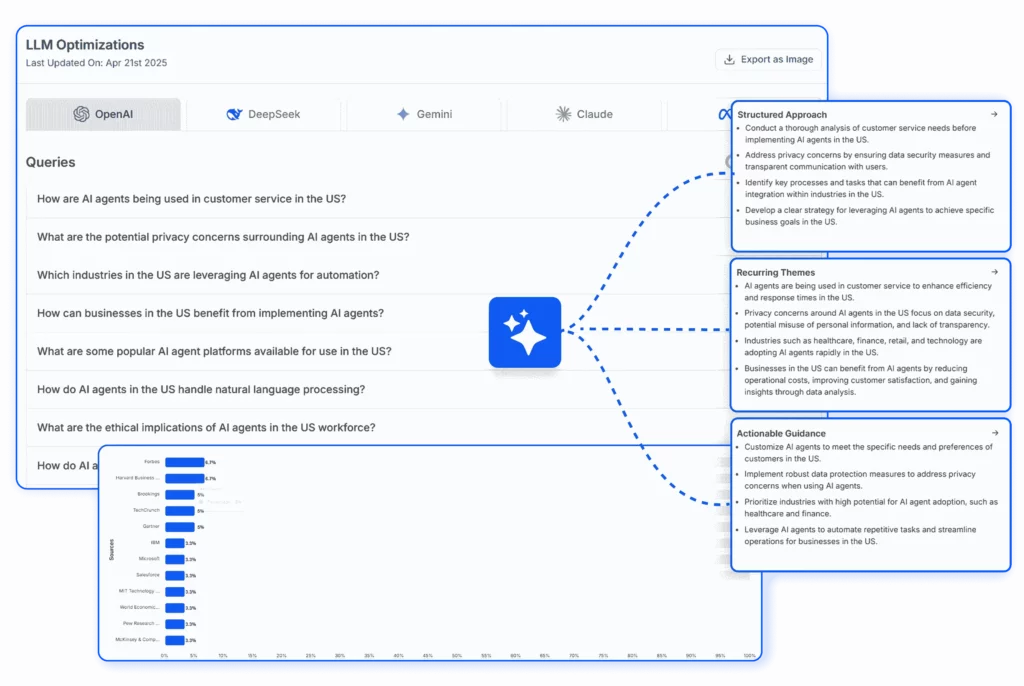
LLM Optimizations
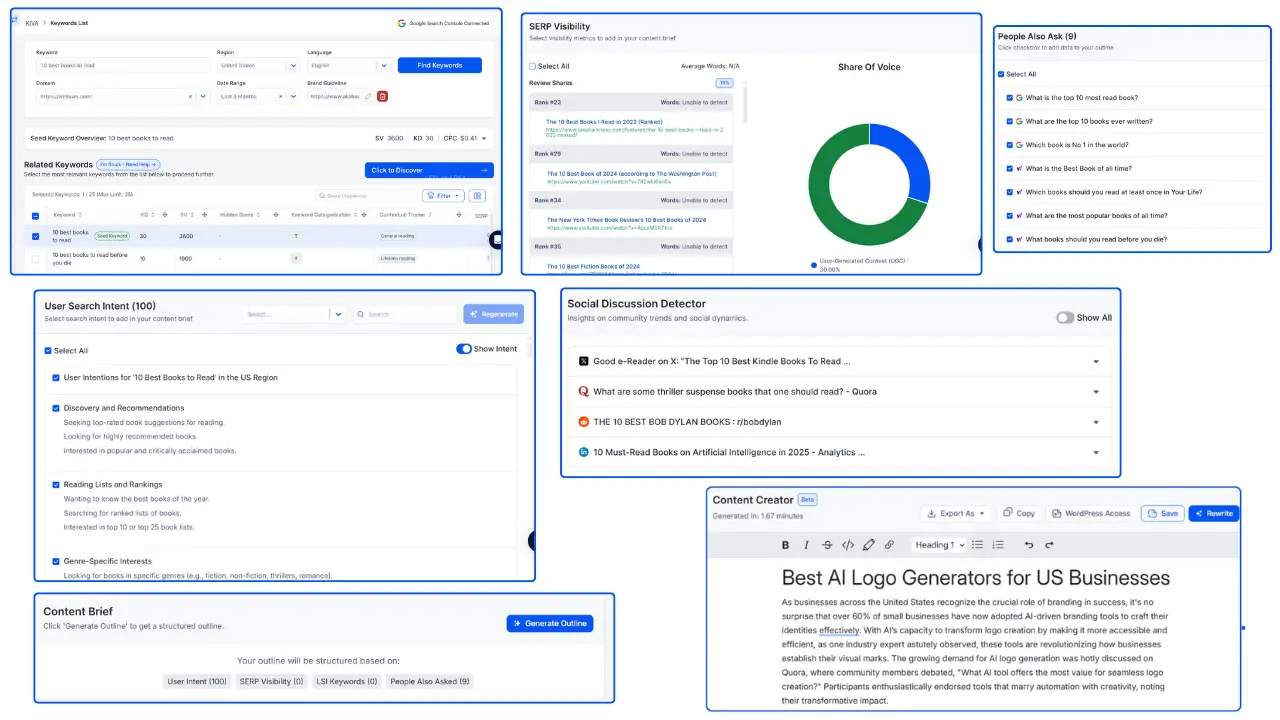
Tracks trending queries across OpenAI, Gemini, Claude, and other models to guide AI-aware opportunities.
User Search Intent
Classifies what users want so your content matches goals, not just keywords.
SERP Visibility
Analyzes live SERP layouts to keep your structure aligned with what ranks now.
Social Discussion Detector
Surfaces conversations on Reddit, X, Quora, and LinkedIn that reveal audience priorities.
LSIs & PAA Keywords
Suggests related terms and People Also Ask queries to strengthen topical depth.
Diagnose Phase: Content Evaluation
Hidden Gems
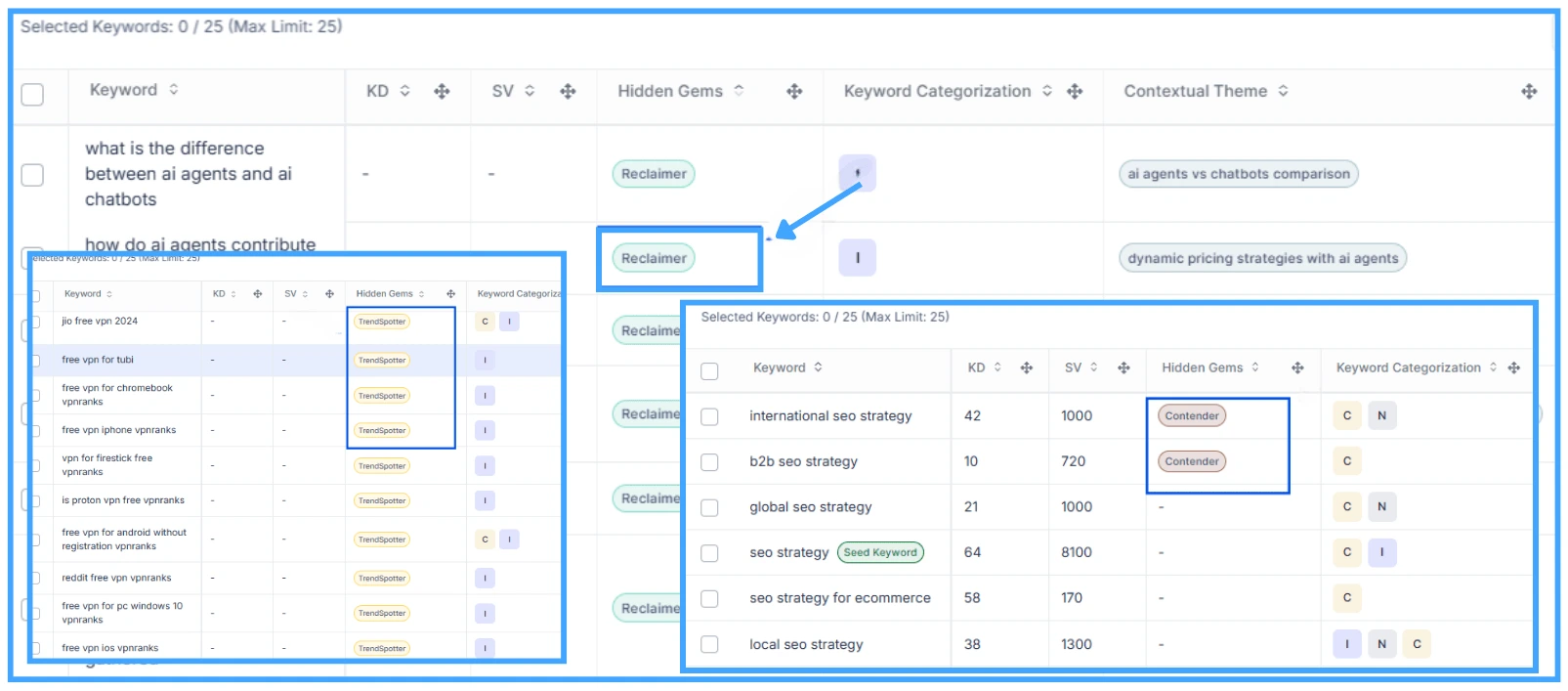
Identifies high-value, low-competition keywords from Search Console and tags them as Reclaimers, Contenders, or TrendSpotters.
Keyword Clustering
Groups related terms by intent and topic to create focused, theme-driven pages.
User Intent Analysis
Buckets queries into informational, commercial, or navigational to guide optimization.
LLM Visibility
Shows how your keywords appear in AI-generated results, helping align content for LLM query mapping.
Social Discussion Detector
Highlights trending talking points and content gaps from active discussions.
Deploy Phase: Execution & Brief Generation
Content Brief Generator
Builds SEO briefs using SERP signals, LLM insights, and intent clusters ready for editing or expansion.
Content Creator
Drafts optimized content with your clustered keywords, brand guidelines, and chosen format.
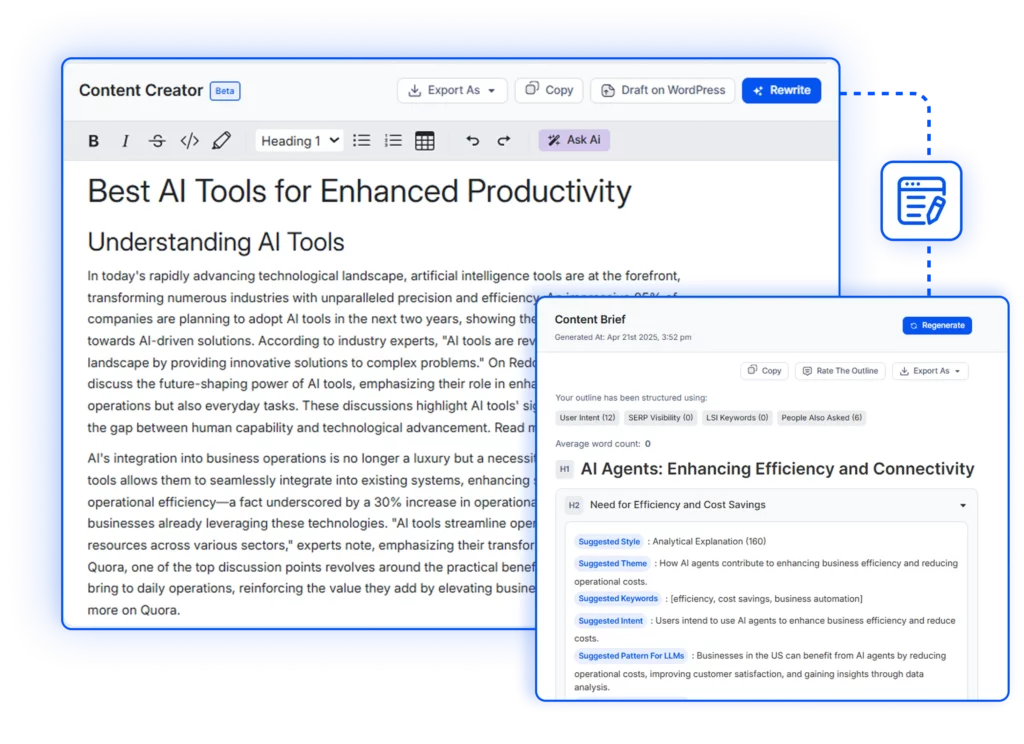
Content Scoring
Rates drafts on structure, clarity, topical coverage, and competitiveness.
Tell AI & Humanize AI
Refines or humanizes AI-generated text to match tone and improve readability.
This phase reflects automated optimization workflows. Instead of passively tracking issues, agents generate execution-ready outputs that accelerate publishing while preserving quality control.
Agent Integration: AI SEO Agents like KIVA embed directly into your workflow. They don’t replace strategy they highlight what needs action, making SEO automation best practices easier to apply without silos.
Efficiency isn’t optional it’s the baseline.
A 2025 report from SeoProfy confirmed that 86.07% of SEO professionals use AI for audits, keyword clustering, and metadata generation. Adoption of auto SEO solutions continues to grow as businesses prioritize speed.
With built-in human checks, SEO automation workflows become a competitive edge. They clear the noise so your team can think bigger, execute faster, and deliver sustainable growth.
How to Build Your SEO Automation Loop (Detect–Diagnose–Deploy)
SEO doesn’t pause for bandwidth. Rankings shift, traffic drops, and visibility slips and by the time teams react, the damage is already done.
That’s why smart marketers follow the Detect–Diagnose–Deploy loop. This framework closes the gap between spotting a problem and fixing it. With the right SEO automation workflows, you eliminate delays while preserving quality.
Traffic slips → Detect: KIVA flags keyword decay → Diagnose: Clusters queries and maps them to the right page → Review: Human oversight validates changes → Deploy: Optimized content goes live with full tracking.
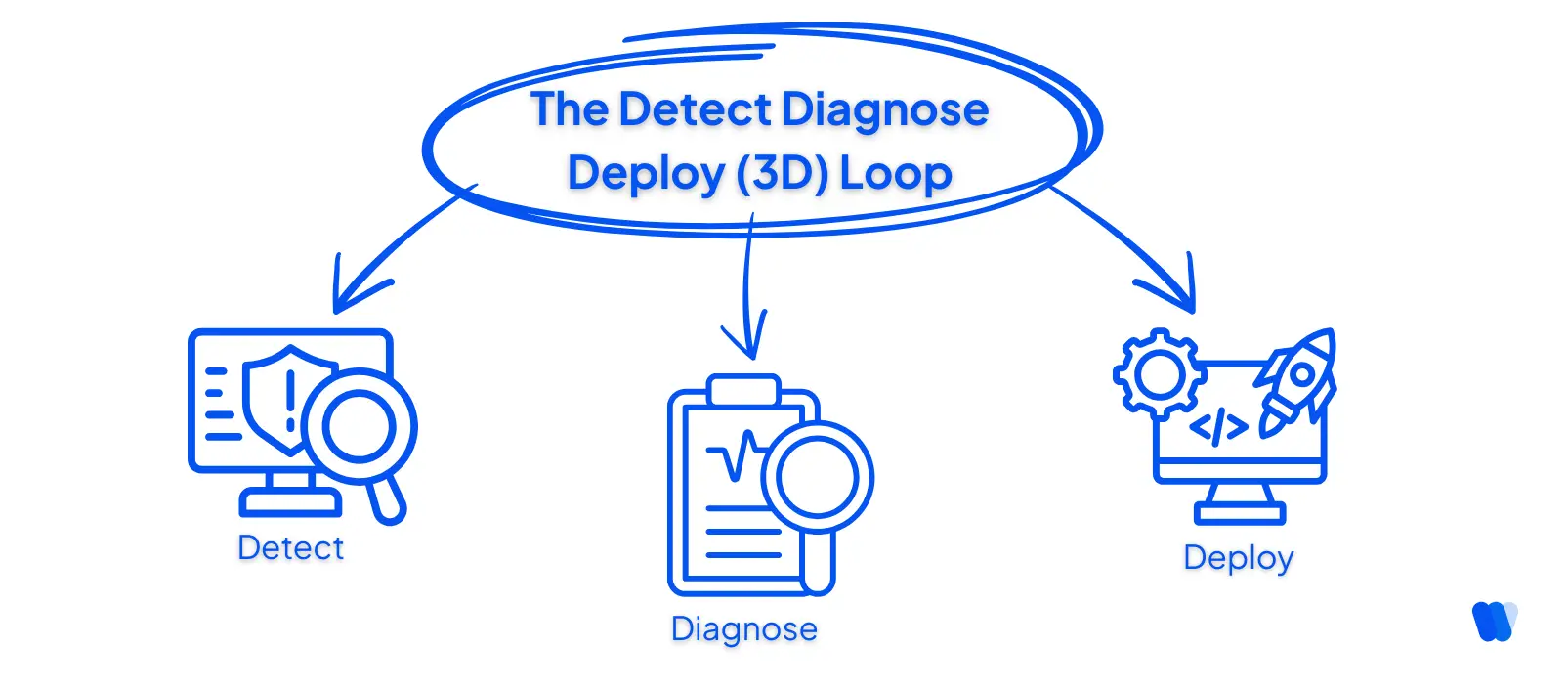
The detect phase begins with visibility signals. The KIVA AI SEO Agent scans Google Search Console and LLM coverage to flag keywords losing traction.
In diagnose, KIVA applies keyword clustering and intent analysis to regroup terms and connect them to underperforming or underutilized pages streamlining automated optimization processes.
Finally, the deploy phase activates. KIVA generates structured briefs using SERP trends, intent clusters, and LLM insights. Editors review, refine, and publish with confidence.
The real advantage lies in focus. You’re not guessing you’re acting on prioritized insights: clustered, execution-ready, and backed by automated SEO strategies. This loop turns delays into fast, repeatable actions that scale from small businesses to enterprise sites.
Avoid These SEO Automation Pitfalls
Automation isn’t “set and forget.” Without oversight, even the best SEO automation software can go off track. Avoid these common pitfalls:
-
- Over-automation
Skipping human review can cause tone issues or off-brand messaging. KIVA doesn’t auto-publish it accelerates workflows while preserving quality. - Automating strategy
You can automate research, briefs, and clustering but not your product story. SEO automation best practices require human creativity, positioning, and brand knowledge. - Misreading intent
LLM tools may surface the wrong angle if applied blindly. Use a structured semantic clustering checklist to stay aligned with real user intent. - Skipping human QA
Even optimized drafts need final checks for clarity, tone, and accuracy. Agents accelerate execution, but strategy still benefits from human oversight.
- Over-automation
When paired with platforms like the AI Search Visibility Platform for Startups, this approach turns automation into measurable visibility growth — connecting SEO performance with how brands actually appear across AI-powered search results.
Why KIVA Is the SEO Agent Behind the Automation Loop
Most SEO automation tools stop at reporting. KIVA goes further it uncovers keyword opportunities, clusters them by intent, and delivers an actionable plan before your visibility drops.
| Tool | Type | What It Automates | Human Role |
|---|---|---|---|
| KIVA by Wellows | Agent | Finds Hidden Gems, clusters by intent, and turns insights into editable briefs and draft content | Strategy, final editing, brand alignment |
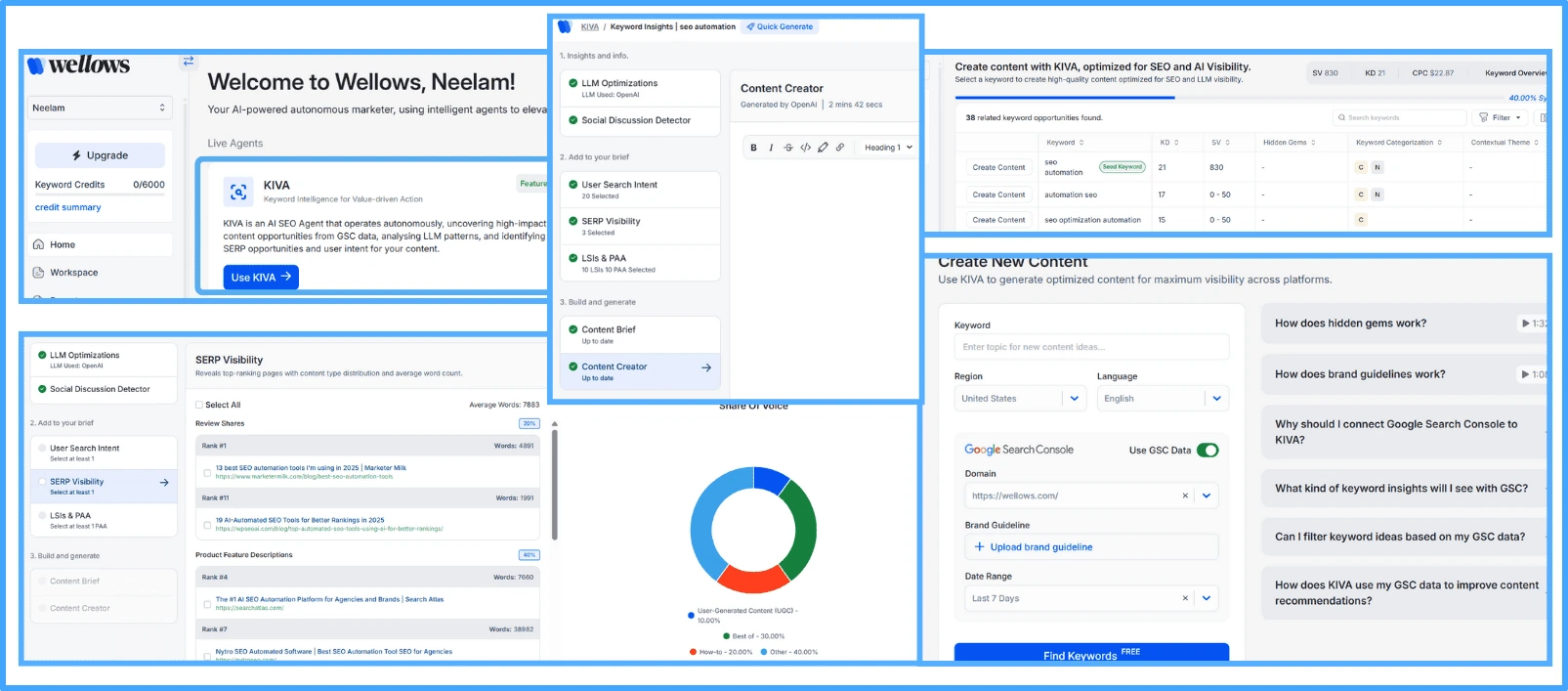
Most platforms just send alerts. True agents like KIVA close the gap between data and execution. By combining automated SEO strategies with human oversight, KIVA transforms insights into briefs, clusters, and drafts you can publish immediately. This makes SEO process automation practical, scalable, and results-driven.
Read More Articles
FAQs
Traditional platforms report issues, but agent-based systems act on them. KIVA detects problems in real time, suggests fixes, and automates execution bridging the gap between SEO automation vs. traditional SEO methods.
No. While SEO automation software can handle 80% of repetitive tasks, human input remains essential for creativity, compliance, and strategy. Automation reduces manual work but doesn’t replace expertise.
The most effective use cases include internal linking, metadata generation, keyword clustering, decay detection, and real-time audits. These examples show what SEO automation entails in practice.
Yes. If left unchecked, automation can misinterpret updates, over-optimize, or damage user experience. Human QA ensures SEO automation best practices stay intact.
No. Automation accelerates execution, but manual SEO still matters for storytelling, strategy, and audience alignment. The strongest results come from combining automation with expert guidance.
Final Thought:
Without SEO automation tools, even the best SEO strategies stall under manual effort.
This isn’t about adding dashboards it’s about removing friction that slows execution and reclaiming time for strategy, not spreadsheets. With the right SEO automation software, teams eliminate delays and stay focused on growth.
When agents surface the next right move a hidden keyword, a missed cluster, or an emerging LLM trend you guide outcomes with precision instead of guessing. You stay in control, but without the lag.
Start small. Automate one recurring task like keyword clustering or brief creation and let automated SEO strategies carry the load. Measure the time saved, then expand what works.
Whether you’re a solo consultant or managing 10 clients, SEO process automation should never feel like another tool. It should feel like air essential, effortless, and always running in the background.