Managing content for multiple clients across different industries can feel like juggling flaming torches—exciting, but one slip and everything comes crashing down.
For marketing agencies and independent professionals alike, one of the toughest challenges is keeping every client’s brand voice consistent across channels.
Brand voice consistency isn’t just a “nice-to-have.” It builds trust, recognition, and authority. When audiences experience the same tone and messaging everywhere, they’re more likely to remember the brand, trust it, and take action.
That’s where visibility matters. An AI Search Visibility Platform helps agencies and freelancers track tone, phrasing, and alignment across every channel keeping brand voice consistent, discoverable, and ready for both search and AI ecosystems.
Want to know if your brand is visible to AI models? Book a Demo ↗ to see how Wellows tracks and strengthens your E-E-A-T signals across AI ecosystems.
With features like KIVA’s Brand Guidelines, agencies and freelancers can centralize voice profiles and automate tone consistency across all projects and niches.
This allows teams to focus on creativity and strategy while maintaining a recognizable, trustworthy brand voice.
This blog will show you how to simplify that process, save time, and confidently deliver content that sounds like your clients every time.
Why It’s Important to Maintain Brand Voice for Agencies
For agencies handling multiple clients, keeping messaging consistent is a real challenge. A strong brand voice ensures every piece of content feels authentic, helping brands stand out and build trust.
What is Brand Voice?
A brand voice is the unique way a brand communicates with its audience. It’s shaped by four key elements: tone (formal or casual), style (word choice and structure), personality (brand character), and messaging pillars (core themes and values).
Connecting brand voice to SEO strategies ensures messaging remains consistent, engaging, and optimized for search visibility
When these elements are consistent, audiences instantly recognize and connect with the brand. This consistency builds credibility, improves engagement, and strengthens overall brand identity.

Research shows that brands with consistent messaging can boost their revenue by as much as 23%. (Forbes, 2021)
What are Top Challenges of Maintaining Brand Voice Across 5+ Niches
Managing brand voice for one client is tough enough, but handling five or more niches takes the challenge to another level. Agencies must juggle different tones, industries, and expectations while delivering consistent, high-quality content.
Without the right systems, it’s easy for messaging to become inconsistent and for teams to feel overwhelmed.
Top Challenges of Maintaining Brand Voice
Below are some of the biggest hurdles agencies face when trying to maintain a clear and consistent brand voice across multiple clients.
- Managing Multiple Style Guides and Tone Shifts
Each client’s tone, style, and personality are unique. Switching between them daily is mentally draining and time-consuming without centralized documentation. - Content Fatigue and Errors from Manual Processes
Relying on manual checks makes errors inevitable. Constantly adjusting tone for multiple clients slows production and leads to team burnout. - Scaling Personalization Without Losing Authenticity
Clients want content that feels personal. Achieving this at scale—without sounding robotic or generic—is a major challenge for agencies. - Collaboration Challenges Across Teams and Freelancers
With multiple people working on content, inconsistency is common. Without clear guidelines and processes, messaging quickly loses its coherence.
Implementing structured workflows supported by automation for agency workflows helps teams stay aligned and reduce errors.
For independent professionals managing multiple clients, the AI Search Visibility Platform for Freelancers offers the same intelligent automation and brand alignment tools—helping solo marketers maintain consistency, optimize tone, and scale their output with ease.
What are the Core Strategies to Maintain Brand Voice Across Clients
Keeping brand voice consistent while managing multiple clients may seem overwhelming, but with the right strategies, it becomes manageable and scalable.
Maintaining a consistent brand voice across all content—whether for a single brand or multiple clients—can seem overwhelming. But with the right strategies, it becomes manageable and scalable.
Agencies can create systems and workflows that make it easier to switch between tones and styles without losing quality.
Using SEO automation ensures brand messaging remains consistent while scaling content production.
Core Strategies to Maintain Brand Voice Across Clients
This section will show you practical ways to simplify content creation, reduce errors, and ensure every piece of content reflects each client’s unique voice.
1) Build and Enforce Detailed Brand Guidelines
Brand guidelines are the foundation of a consistent brand voice. They help teams understand tone, style, and messaging rules, so content always feels aligned with the brand.
With KIVA’s Brand Guidelines feature, agencies can centralize brand rules in one AI-powered hub. This makes it easy for every team member or freelancer to create content that’s always on-brand.
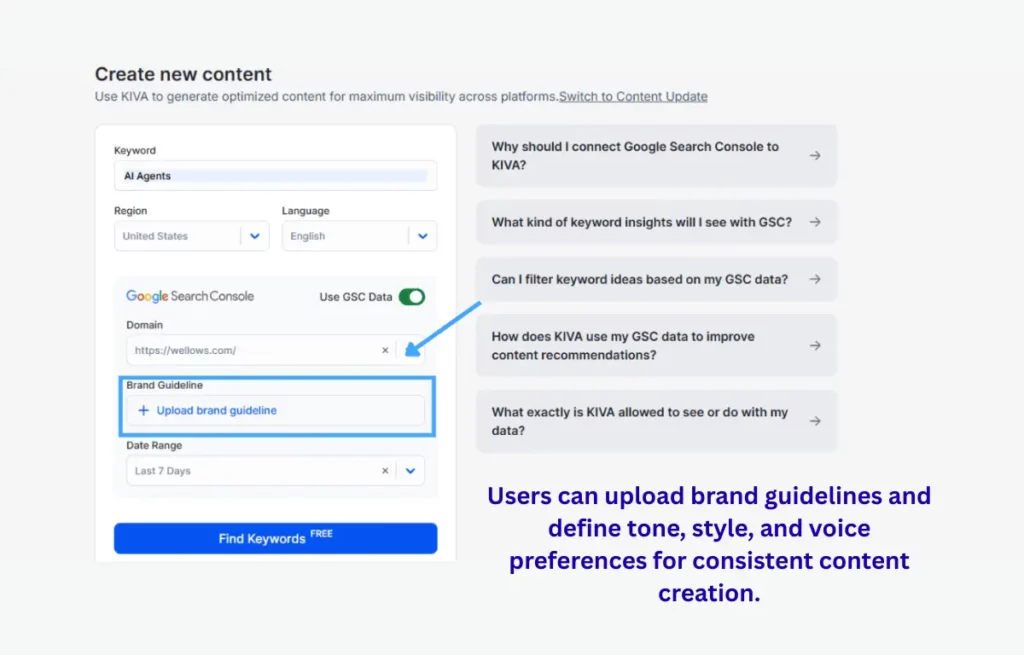
Detailed guidelines paired with effective internal linking reinforce a cohesive brand presence across websites and campaigns
2) Create Voice Profiles for Each Client
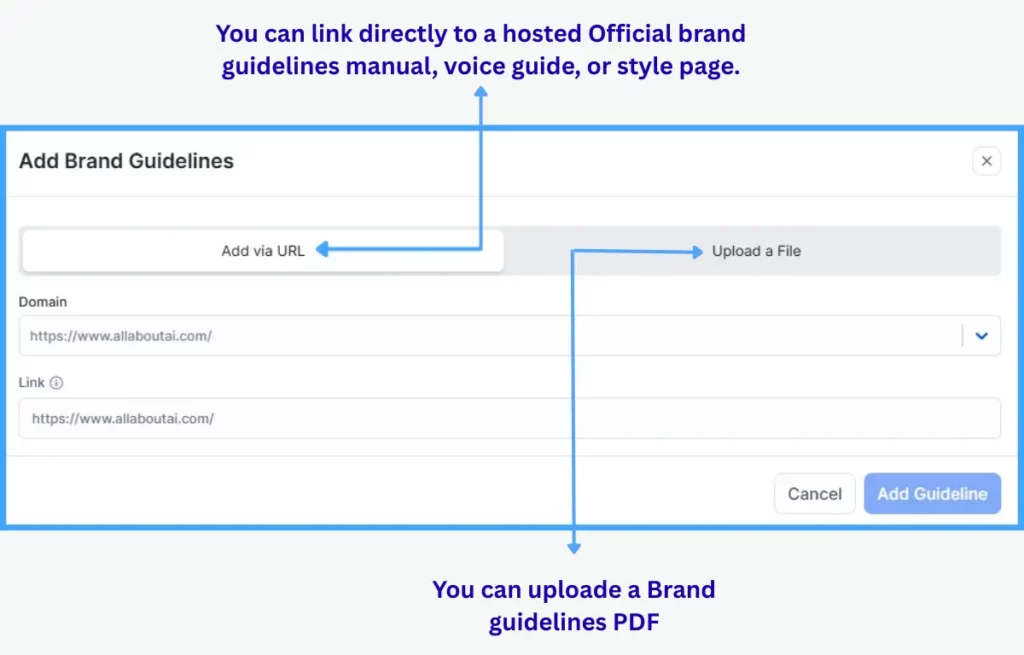
Every client has a unique personality and audience. Documenting tone, style, and preferred phrases ensures no two brands sound alike.
KIVA can simplify this process by creating and updating these profiles automatically. This helps agencies manage multiple client voices without confusion or guesswork.
3) Automate Content Generation and Quality Control
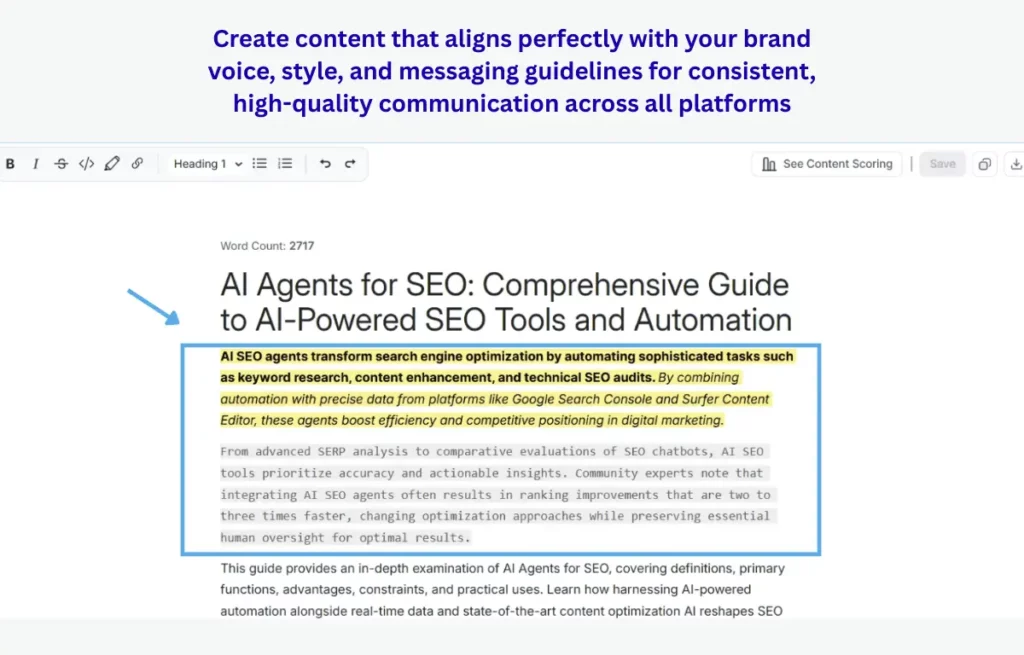
Manual checks waste time and often miss small inconsistencies. Automating brand voice checks ensures content accuracy while saving hours of editing while saving hours of editing, showing a clear shift toward AI vs traditional optimization approaches.
With KIVA, agencies can generate long-form content that align with each client’s voice. This automation reduces errors and helps teams focus on strategy and creativity.
4) Implement Multi-Layered Review Processes
A strong review system catches inconsistencies early. Combine peer reviews, editor checks, and AI-powered audits to make sure content is polished and brand-safe.
Having structured approvals helps agencies maintain high-quality standards across all projects, no matter how many clients they handle.
How to Localize Brand Voice Guidelines?
Adapting your brand voice to different cultural contexts is essential for connecting with diverse audiences while maintaining a cohesive identity. According to global brand voice consistency across cultures research article insights, successful localization requires balancing cultural sensitivity with brand consistency.
Here’s how to effectively localize your brand voice guidelines:
1. Conduct In-Depth Cultural Research
Start by analyzing the target market’s cultural nuances, values, and communication styles. Understanding local humor, tone preferences, and social norms helps shape your message so it feels authentic and relevant.
2. Build a Flexible Voice Framework
Develop a set of global brand voice principles—such as tone, personality, and messaging pillars—but allow room for local adaptation. This ensures your brand sounds consistent worldwide while resonating naturally within each culture.
3. Prioritize Transcreation Over Translation
Transcreation adapts your message creatively to preserve intent, tone, and emotional impact in different languages. It ensures your brand sounds native and relatable, rather than mechanically translated.
4. Collaborate with Local Experts
Work with native linguists and cultural consultants who understand local nuances. Their insights help refine tone, idioms, and expressions to better align with the expectations of regional audiences.
5. Adapt Visual and Verbal Elements
Adjust colors, imagery, and symbols that may have different meanings across cultures. Similarly, fine-tune tone and formality levels in your language to fit local etiquette and communication preferences.
6. Test Before Launch
Test localized campaigns with small focus groups in the target market. Gathering real audience feedback helps identify misinterpretations or cultural gaps before a wider rollout.
7. Preserve Core Brand Identity
While adapting, maintain your brand’s mission, vision, and core personality. Consistency in these foundational elements ensures that your global identity remains recognizable and trustworthy.
Mastering how to localize brand voice guidelines allows you to strike a balance between authenticity and uniformity. By combining cultural intelligence with adaptable voice principles, your brand can engage meaningfully with audiences across the globe without losing its essence.
The Role of AI in Scaling Brand Voice Consistency
AI can act as a powerful “brand voice enforcer,” helping agencies maintain consistency across every piece of content. Instead of relying on manual checks, AI instantly analyzes tone, style, and messaging to ensure every post, ad, or article aligns with the client’s brand identity.
This capability reflects the broader benefits of AI SEO agents in helping agencies scale branding and performance
With KIVA’s AI-driven Brand Guidelines, agencies get a centralized system that keeps voice, style, and branding rules accessible for every team member. Its SEO automation features also ensure content stays optimized while maintaining each brand’s unique voice.
This approach reduces time spent on editing, rewrites, and quality checks. Teams can focus on creativity and strategy while AI handles consistency, helping agencies scale faster without sacrificing quality.
How To Maintain a Consistent Brand Voice with Generative AI
Maintaining brand voice with generative AI requires more than just prompting—it needs clear guardrails and ongoing oversight. Here are best practices:
- Build a Brand Style Guide: Define tone, vocabulary, and language rules so AI outputs remain consistent.
- Train AI with Brand Data: Feed past content into AI workflows to help it mirror your voice naturally.
- Use Human-in-the-Loop Reviews: Keep editors in place to refine AI drafts and catch tone mismatches.
- Leverage AI Voice Tools: Employ platforms that provide real-time tone analysis and enforce style rules.
- Continuously Monitor and Adapt: Regularly audit AI outputs, update guidelines, and fine-tune to match evolving brand needs.
By combining these practices with automation, agencies can confidently scale content while ensuring every word still sounds authentic to the brand.
What Tools and Resources Can Assist in Enforcing Our Brand Voice Guidelines?
Maintaining a consistent brand voice is essential for building trust and recognition. To streamline enforcement, several tools enforcing brand voice guidelines and platforms can help ensure every piece of communication aligns with your brand identity. Here’s a list of powerful solutions and resources for brand voice consistency you can integrate into your workflow:
1. Brand Compliance Platforms
- KIVA: KIVA’s built-in AI Brand Voice Enforcer analyzes tone, readability, and consistency across all written assets. It automatically flags deviations from your defined tone and messaging style, ensuring content remains aligned with your brand’s personality across blogs, social posts, and landing pages.
- Siteimprove: This AI-powered platform automates enforcement of brand, style, and compliance rules. It transforms static guidelines into automated checks, ensuring your content stays consistent across web, social, and email channels.
- Brandy: A centralized hub for creating, updating, and sharing brand assets and interactive style guides in real time. It ensures all teams work from the same brand framework and maintain version control across every update.
2. AI-Powered Content Analysis Tools
- Beam.ai: Beam.ai’s Brand Voice Tool uses AI to define and monitor tone, structure, and message alignment. It ensures every communication reflects your brand’s intended personality and emotional tone.
- GetGenAI: Offers automated tone and style validation across various content types, providing real-time corrections and suggestions for brand consistency.
3. Rule-Based Validators
- Vale: A style enforcement tool that encodes brand guidelines as code. It automatically detects deviations, enforces approved terms, and ensures grammatical and stylistic consistency throughout your content library.
4. Brand Management Platforms
- Frontify: Provides a centralized platform for brand governance, offering easy access to brand assets, templates, and tone guidelines. It allows real-time collaboration, making it ideal for cross-team consistency.
5. Training and Education
- Team Workshops and Refreshers: Conduct regular brand voice training sessions to ensure all departments—from marketing to customer service—understand and apply the brand’s tone and language consistently.
By combining AI-driven tools like KIVA with collaborative brand management platforms and regular employee training, you can maintain brand authenticity and ensure seamless alignment across all communication channels.
How Freelancers and Consultants Can Maintain Brand Voice with AI
Freelancers and consultants often juggle multiple clients without the support of a large content team. Switching between industries and maintaining a consistent brand personality manually can quickly lead to burnout and uneven messaging.
That’s why many professionals are turning to AI search visibility platforms for consultants and freelancers—tools that bring structure, brand consistency, and intelligent automation into their everyday workflows. These platforms help solo experts create cohesive, data-backed content systems that mirror the same precision and credibility large agencies rely on.
With AI-driven guidance, freelancers can manage tone, phrasing, and visibility signals more effectively—ensuring their work feels aligned, authentic, and competitive in every client’s niche.
How Can I Ensure Consistent Brand Voice Across Freelance Content?
Ensuring consistency across freelance content requires structured guidance and smart processes. Here are practical strategies:
- Develop a Style Guide – Outline tone, vocabulary, and structure so freelancers always have a clear reference.
- Provide Examples – Share samples of approved content to set benchmarks.
- Use Templates – Frameworks for blogs, emails, or social posts help maintain structure and style.
- Offer Training & Feedback – Onboarding sessions and feedback loops reduce mistakes and build alignment.
- Give Detailed Briefs – Each assignment should specify audience, intent, and key brand points.
- Review & Edit – Always run freelance content through internal review before publishing.
- Work Long-Term – Ongoing relationships help freelancers internalize your brand voice.
- Leverage AI Tools – Use AI checks for tone and consistency alongside human review.
By combining these practices with automation, freelancers can produce content that matches brand expectations, while agencies or consultants save time on revisions.
By storing style guides and tone frameworks in one place, freelancers can quickly shift between client voices and deliver content that matches each brand’s identity. Automation eliminates repetitive manual checks, freeing up time for creative work and client strategy.
Many independent professionals face similar struggles, as outlined in Challenges freelancers face. AI provides them with scalable workflows, helping them grow their business while maintaining high-quality branding standards for every client.
What are Best Practices for Agencies to Juggle Multiple Niches
Managing multiple client niches doesn’t have to feel chaotic. Whether you’re managing one brand or juggling multiple niches, consistency comes from structured systems—templates, audits, and centralized assets.
With the right systems, agencies can create content that’s both consistent and creative. These best practices will help your team stay organized, maintain brand trust, and deliver high-quality messaging at scale.
Best Practices for Agencies to Juggle Multiple Niches:
Develop a Centralized Knowledge Hub
Keep all brand guidelines, tone references, and messaging frameworks in one place. A centralized hub makes it easier for teams and freelancers to access client-specific details quickly.
Use Analytics to Monitor Messaging Performance
Track engagement, conversions, and audience feedback to see how each brand’s messaging performs. Analytics helps refine tone and strategy to better connect with target audiences.
Conduct Regular Content Audits: Review existing content periodically to catch inconsistencies.
Align Content with Brand Identity and Audience
Every piece of content should reflect the client’s values, voice, and audience needs. This alignment builds trust and ensures each brand stands out in its niche.
Balance Creativity and Consistency
Creativity keeps content fresh, but consistency builds recognition. Agencies need to strike a balance—experiment with content while staying true to the brand voice.
FAQs
Yes, AI-powered solutions can help maintain brand voice consistency across written, visual, and even voiceover content. By embedding tone, style, and messaging rules into brand guidelines, businesses can ensure every script or recording aligns with their identity.
KIVA’s Brand Guidelines make this scalable by creating AI-powered voice profiles that keep tone consistent across different content types. Combined with multi-step reviews, this ensures authenticity while still allowing agencies and freelancers to produce content at speed.
Conclusion: Future-Proof Your Brand Voice with AI
The ability to maintain brand voice is what sets successful agencies apart. It builds trust, strengthens recognition, and keeps every client’s messaging sharp, no matter how many industries or platforms you manage.
AI takes this a step further by reducing errors, automating checks, and scaling content creation without losing authenticity. With the right tools, your team can focus on creativity while AI ensures every piece stays on-brand.
Explore KIVA to simplify workflows, streamline branding, and confidently deliver top-tier content for every client.